


AI Summary
Is UpdraftPlus not sending email after it backs up your WordPress site? That’s a problem, because those emails are how you know your backups actually work.
UpdraftPlus is a solid backup plugin, but it relies on WordPress to send its emails. And WordPress email often fails or lands in spam.
In this guide, I’ll walk you through how to fix UpdraftPlus not sending email.
Fix Your UpdraftPlus Emails Now
What Is UpdraftPlus?
UpdraftPlus is a WordPress backup plugin. It saves a copy of your site so you can restore it if something breaks.
You can store your backups in lots of places, including:
- UpdraftVault
- Google Drive
- Dropbox
- Amazon S3
- And more
You can run backups by hand or on a schedule. Either way, UpdraftPlus can email you a report when each one finishes.
The free version sends a basic report to your site’s admin email. That includes backups that fail, though the failure report can take a while to arrive.
UpdraftPlus Premium adds more control, like extra addresses and error-only reports.
How to Fix UpdraftPlus Not Sending Email
UpdraftPlus usually stops sending email for 3 reasons:
- The Email report setting is off
- WordPress sends the email, but it never gets delivered
- The backup attachment is too big for the mail server
Check the settings first. Then send emails through an SMTP mailer like WP Mail SMTP and move large backups to cloud storage.

1. Check Your UpdraftPlus Backup Settings
Start with the plugin’s own settings. If you haven’t checked the email box, UpdraftPlus won’t try to send anything.
In your WordPress dashboard, go to Settings » UpdraftPlus Backups. Then click the Settings tab.

Look at the Files backup schedule and Database backup schedule first. Make sure they match when you expect to get emails.
If both say Manual, UpdraftPlus only emails you after backups you start yourself.

Next, scroll down to the Reporting section. Check the Email box if it isn’t already.
Its label reads “Check this box to have a basic report sent to your site’s admin address.”
Then click Save Changes at the bottom of the page.

Now let’s test it. Run a manual backup of your files and database.
If everything works, you’ll get an email when it finishes.
Go back to the Backup / Restore tab and click Backup Now.

When the backup finishes, click View Log. Look for a line that starts with “Sending email”.
It shows how many attachments were sent and who received the report.
If you see that line, UpdraftPlus did its job.
The email left the plugin, so the problem is delivery. Skip ahead to section 2.
No “Sending email” line? Look for one that says no email will be sent. That usually means you haven’t checked the email box or set an address.

Changing the Address for UpdraftPlus Notification Emails
In the free version, you can’t change where reports go. UpdraftPlus always sends them to your WordPress admin email address.
Want them somewhere else? You can change the site admin email address in WordPress. Just remember that WordPress sends other admin notices there too.
Check UpdraftPlus Reporting Settings
UpdraftPlus Premium gives you more control over reports. You’ll find it in the Send reports section of the Settings tab.
Click Add another address to send reports to more than one person. Each address gets its own field.
And watch out for the Send a report only when there are warnings/errors checkbox. If you check it, you won’t get emails for backups that succeed.
2. Fix UpdraftPlus Not Sending Email With SMTP
Maybe your settings are right, and the log shows a “Sending email” line. Then the problem is delivery, and the emails are sent but not arriving.
Your emails get lost, or the receiving servers flag them as spam.
This happens with lots of WordPress plugins. It comes down to how WordPress sends email.
By default, WordPress uses the wp_mail() function to send email from your web server.
Those emails don’t carry proper authentication. So receiving servers can’t easily confirm they really came from your site.
To fix this, you can use WP Mail SMTP.
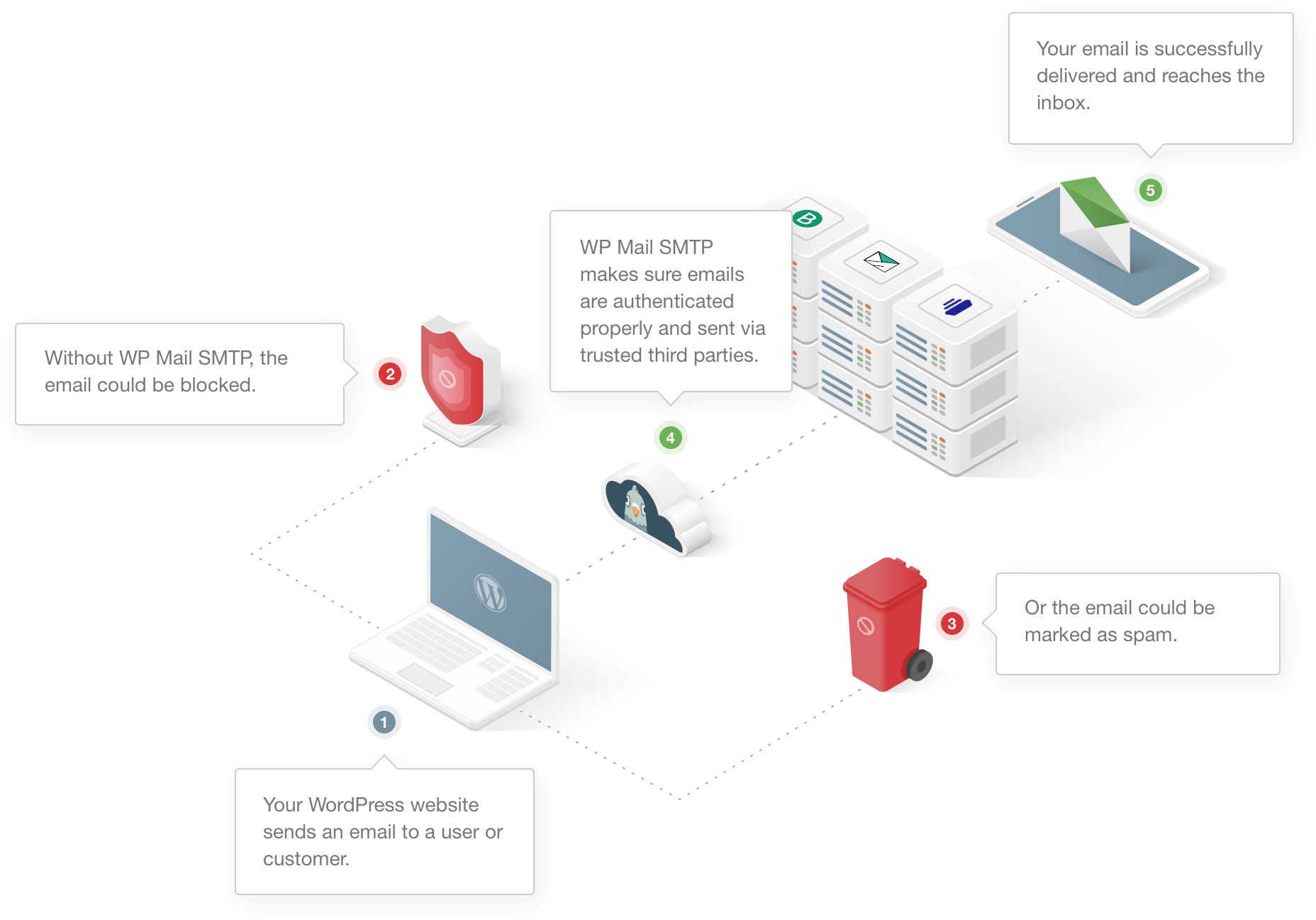
WP Mail SMTP sends all of your site’s email through a proper email provider. It also helps you set up the email authentication that keeps your emails out of spam.
The Elite license includes White Glove Setup. That means a technical expert sets up WP Mail SMTP for you. But you can purchase White Glove Setup as an addon with your current plan at any time.
If you’d rather do it yourself, follow along below.
Install WP Mail SMTP
Log in to your WP Mail SMTP account and click the Downloads tab. Then click the Download WP Mail SMTP button.
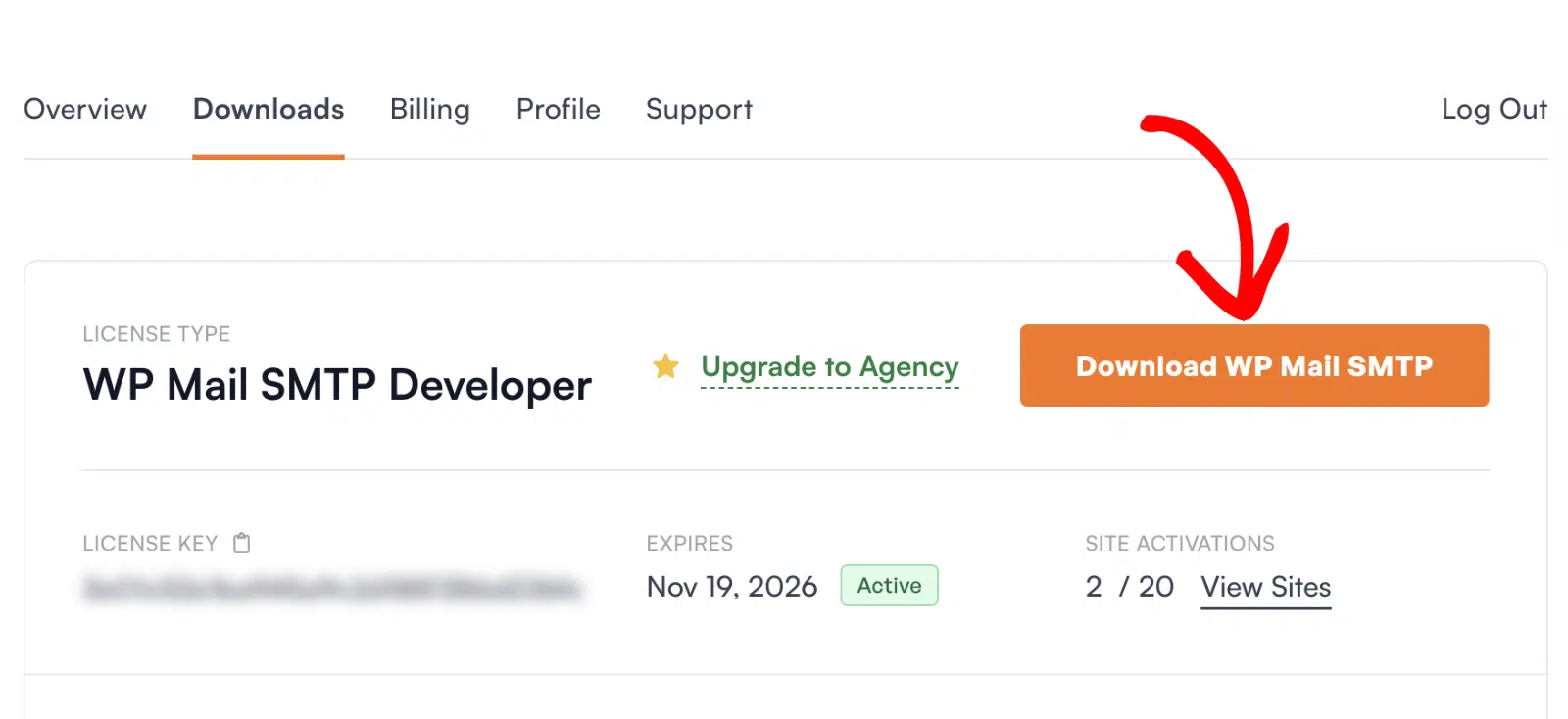
Once you have the zip file, upload it to WordPress and install it. Need help? Our friends at WPBeginner have a guide to installing a WordPress plugin.

Don’t forget to activate the plugin. That opens the Setup Wizard.
If you’re not ready yet, you can come back to it later. Go to WP Mail SMTP » Settings and click Launch Setup Wizard on the General tab.

Choose Your New Email Provider
The wizard asks you to pick a mailer. That’s the email service that will send your site’s emails.
There are good free and paid options.
Does your site only send a few backup reports and form notifications? Then a free plan is fine. For busier sites and stores, I recommend a transactional email provider like SendLayer.
Not sure which to pick? Our guide to email providers compares them all.
Click Let’s Get Started to see the full list.

Now pick your mailer from the Choose Your SMTP Mailer step.

Then open the setup guide for the mailer you chose:
- SendLayer
- SMTP.com
- Brevo (formerly Sendinblue)
- Amazon SES
- Elastic Email
- Google / Gmail
- Mailgun
- Mailjet
- MailerSend
- Mandrill
- 365 / Outlook
- Postmark
- Resend
- SendGrid
- SMTP2GO
- SparkPost
- Zoho Mail
- Other SMTP
Want more than one mailer? After the wizard, you can add Additional Connections.
Then you can pick a Backup Connection and set up Smart Routing.
Once your mailer is set up, come back to this guide.
Turn on WordPress Email Logging (Optional)
Next, the wizard asks which features you want. The wizard switches on 2 for you:
- Improved Email Deliverability: sends all of your emails through your chosen mailer.
- Email Error Tracking: alerts you to problems when emails fail.

Detailed Email Logs is optional, and it’s part of WP Mail SMTP Pro. It records details about every email your site sends, including:
- Email headers
- Subject line
- Date sent
- Status
This is really useful for UpdraftPlus. The log shows you:
- Each backup email
- Its delivery status
- Whether it had attachments
You can also turn on Instant Email Alerts. They tell you whenever your site fails to send an email. The Weekly Email Summary sends you a quick overview of your delivery stats.
On the next screen, you can choose advanced email log settings.

These options let you:
- Store email content
- Save file attachments
- Track opens and link clicks
Our guide to WordPress email logging explains each one.
The wizard asks for your license key. Depending on your version, that’s at the start or near the end.
Pasting it in unlocks the Pro features and updates.

Your screens may vary. On live sites, the hosted wizard may ask for the key at the start.
That’s it! UpdraftPlus will now send its reports through your mailer instead of your web host.
That works for both manual and scheduled backups.
There’s one more issue you might hit, and it’s about backup attachments.
3. Fix UpdraftPlus Missing Email Attachments
If UpdraftPlus backup emails arrive without attachments, the files are usually too big. Most mail servers cap messages at around 10–20 MB.
UpdraftPlus can save your backups in different ways. For example, you can:
- Save backups to cloud storage
- Store backups on another server using FTP or SFTP
- Get the backup files by email
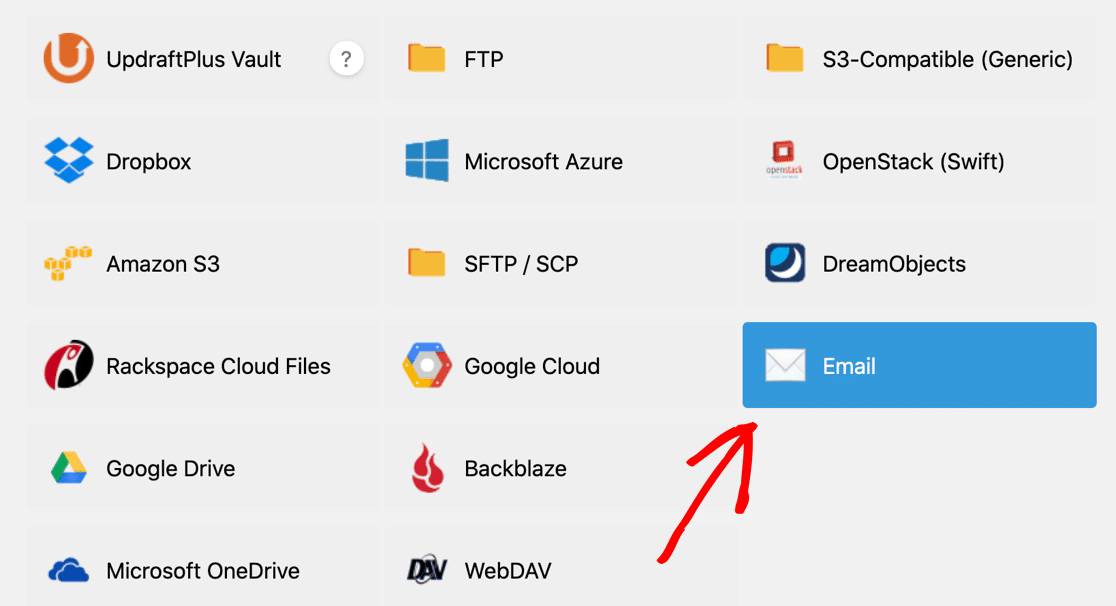
If you choose Email, UpdraftPlus sends several emails per backup. Each one carries a single backup archive, such as your plugins, themes, uploads, or database.
Sometimes those emails don’t arrive, or they show up without the attachment. That’s usually because:
- Mail servers have size limits. UpdraftPlus itself warns they’re typically around 10–20 MB.
- Email providers block or strip some attachments because attachments often spread malware.
UpdraftPlus warns you in the backup log when an archive is over 20 MB. If you see that warning, email isn’t the right place for that backup.

Here’s an example. These are the backup emails from one manual backup.
Only 1 still has its attachment. The email provider stripped the rest, including the database backup.
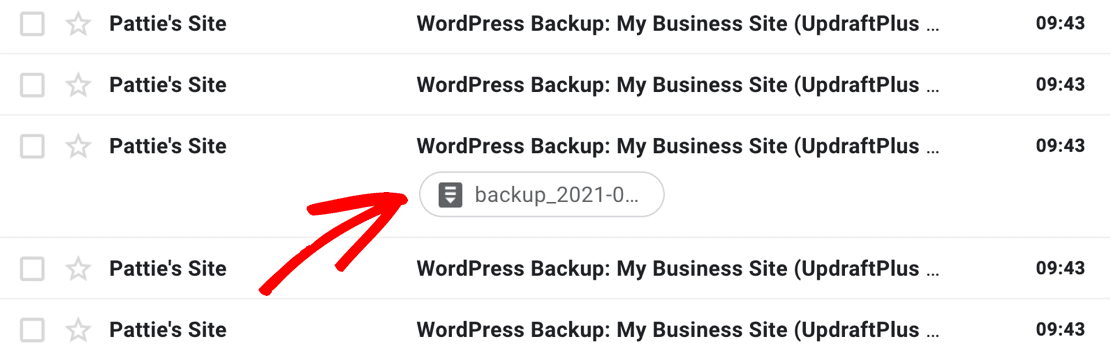
Most WordPress sites are too big to back up by email. But you can check what’s happening if you want to be sure.
In WP Mail SMTP Pro, open your email log and find the backup email. In this example, the email clearly had 1 attachment when it left the site.

Does the log show the attachments, but you never receive them? Then your backup files are too big for email. Switching email providers probably won’t help, because most have similar limits.
You can save sent attachments in WordPress with WP Mail SMTP. Just keep in mind that backup files can fill your hosting disk space fast.
I recommend sending your backups to cloud storage instead of your inbox.
You’ll still get UpdraftPlus reports by email through your mailer. Your backup files just live safely in your cloud account.
Frequently Asked Questions
Here are quick answers to common questions about UpdraftPlus emails.
Does UpdraftPlus free email you when a backup fails?
Yes. In current versions, the free version sends a report for a failed backup too. But UpdraftPlus retries a failed backup several times first. So the failure email can arrive hours after the backup started.
Can I change where UpdraftPlus sends reports?
Not in the free version. It always sends reports to your WordPress admin email address. You can change that address in WordPress, but other admin notices go there too. UpdraftPlus Premium lets you add more addresses in its Send reports section.
Next, Check Your DNS Zone
Want UpdraftPlus emails to work reliably? You’ll need to add some records to your DNS zone.
Skip this step, and receiving servers might not deliver your emails. Gmail might also show a ‘be careful with this message’ warning.
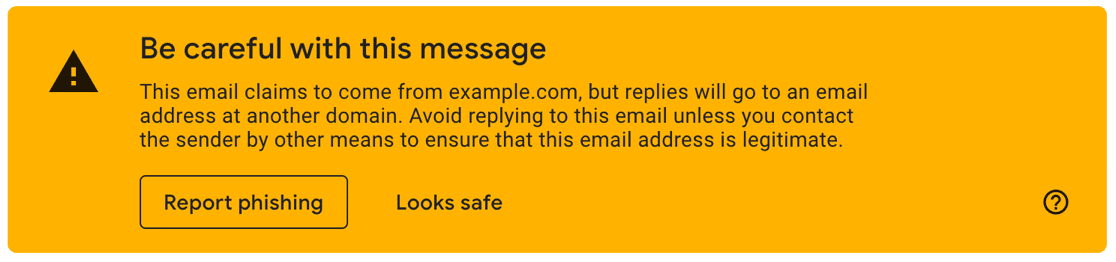
Your DNS records usually live with your web host or domain registrar. Adding the right ones removes these warnings and helps your emails get delivered.
Start with our guide on how to add a DMARC record to your domain.
Ready to fix your emails? Get started today with the best WordPress SMTP plugin. If you don’t have the time to fix your emails, you can get full White Glove Setup assistance as an extra purchase, and there’s a 14-day money-back guarantee for all paid plans.
If this article helped you out, please follow us on Facebook and Twitter for more WordPress tips and tutorials.
